
![[Image] PDF](/it/files/scott_sandstrom_ph03_tcm123-2961297.jpg?impolicy=resize&imwid=260&imhei=337)

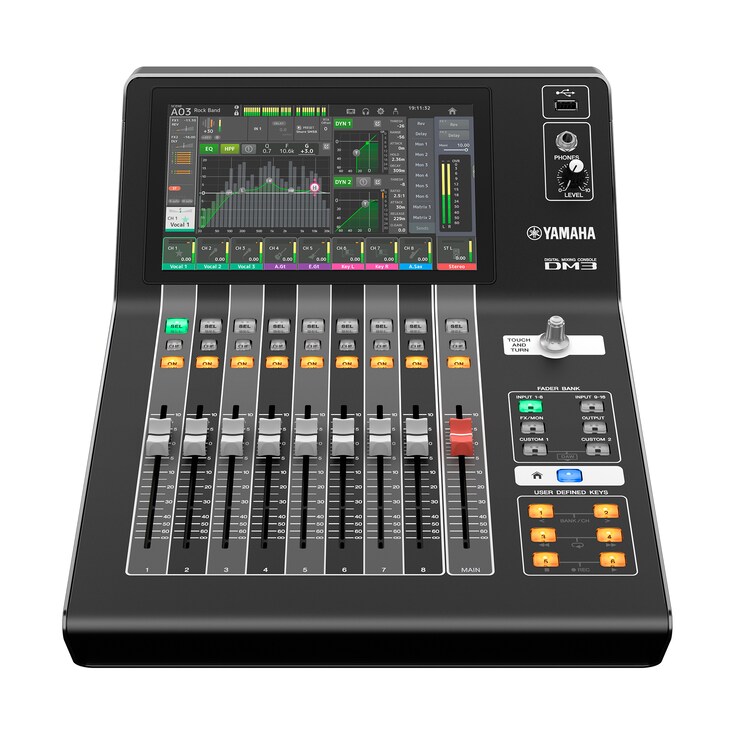
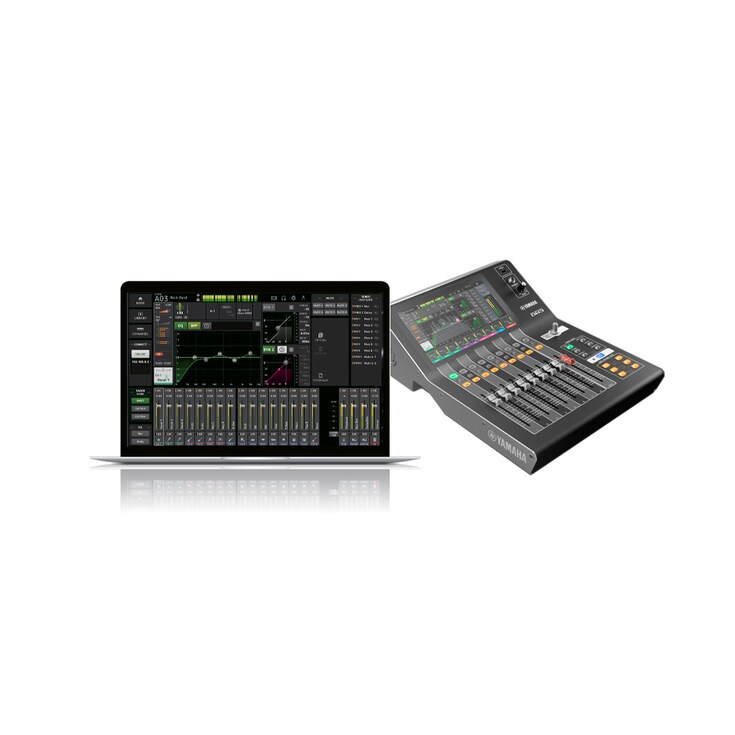
Il mixer digitale compatto della serie DM3 offre funzionalità versatili e portabilità per un'ampia gamma di applicazioni. Propone una qualità del suono eccellente, un funzionamento rapido e semplice e funzioni di livello professionale.
Inside the NCAA Football Booth: Audio Engineer Scott Sandstrom on Submixing with DM3 and Dante
-
Live Events
-
Live Sound & Event Production
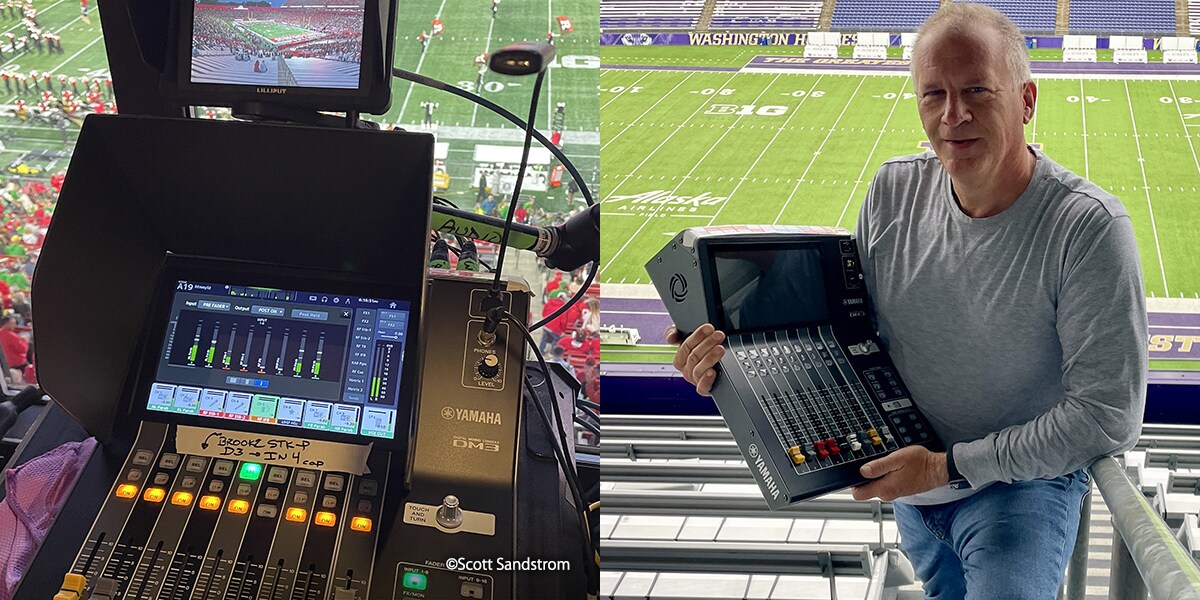
DM3 in NCAA broadcast booth (left), Scott Sandstrom, Audio Engineer (right)
When you’re crammed into a college football broadcast booth with two 19-inch racks and a pile of RF gear, every inch counts. For freelance RF/Submix engineer Scott Sandstrom, that reality drove his move from analog to Yamaha’s DM3. “The network was previously supplying an analog mixer” he recalls. “I’m like, I’m stepping this game up and the DM3 is the right tool for this position.”
Sandstrom handles the football effects submix for a national network, feeding the truck a clean bed of parabolic mics, umpire mic, stick mics and IFB sends. “I’m mixing technically for television but also send a courtesy efxs feed to radio.” he says. “Four to six parabs on the field, all wireless with the main four having copper backups. I also have RF duties – frequency deployments, reporter stick mics, backups, all that. My feed goes directly to the truck, and the A1 folds it into the show.”
Space is always a battle. “Some booths are NFL-luxurious. Others? You’re lucky to fit a chair,” he laughs. “I needed a subcompact mixer that would give me compression, EQ, and preferably delay. The DM3 stepped in. I can set it right on top of a rack, go vertical, keep my footprint small, and I’m not in anybody’s way.”
Making Six Mics Sound Like One
The core challenge of effects submixing is cohesion. “The goal is making four or six parabs sound like one mic,” Sandstrom says. His tools include Sony ECM-77S mounted in parabolic dishes. “I’ll rent eight so I can pick the best six. Then it’s EQ - scooping out the dish hollowness so it sounds natural.”
That balance has to hold up beyond gameplay. “Our show often covers the marching band for 90 seconds pregame, so you still want a full, round sound.”
While the DM3 includes a capable Automix function, Sandstrom opts for manual control in live football. “In a stadium environment, there’s so much noise and so many variables,” he explains. “I have the visual from the press box. If it’s a 50-yard pass, I know where the ball is going and which parab needs to come up.”
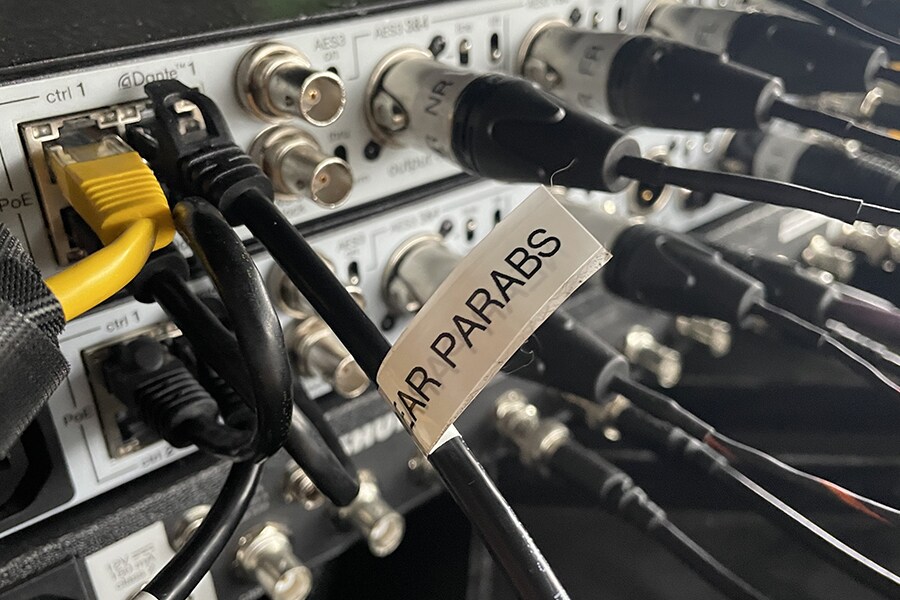
DM3, Dante and Parabolic mic outputs
Dante on His Terms
Sandstrom’s racks are tied together via a self-contained Dante network. “I started doing all the Dante certs. I’m an old guy learning networking,” he jokes. “I’ve got Axient receivers - eight channels - and AVIO adapters for IFB sends. Everything hits a 5-port switch in each rack, then into the DM3. Bing, bang, boom.”
Despite the digital backbone, analog redundancy remains non-negotiable. “You don’t want to get caught. I’ve got analog backups from Axient to the console. The reporter stick mic is the money maker. That has to get to the truck no matter what.”
Some stadiums offer Dante infrastructure, but Sandstrom prefers to stay isolated. Trucks are getting into Dante too. I had one say, ‘Oh, you’ve got Dante - let’s play.’ I said, ‘On setup day, sure. Then I’m gonna stop.’”
Speed, Reliability, Sanity
For a role that combines RF deployment and live submixing, setup speed is critical. “I used to travel with a quad compressor, just thrown in a bag,” Sandstrom says. “Now with the DM3, it’s one box.”
Preparation starts before he ever hits the stadium. “I downloaded the DM3 Editor before I even had the console, built my show, and saved it to a thumb drive. First gig: plug in, load, and go.”
The improvement hasn’t gone unnoticed. Viewers may never consciously register the difference, but they feel it: cleaner hits, tighter crowd swells, and a more natural sense of space that pulls them into the game without calling attention to the mix. “But honestly, the big win for me is workflow,” Sandstrom adds. “Anything that cuts my setup time is gold.”
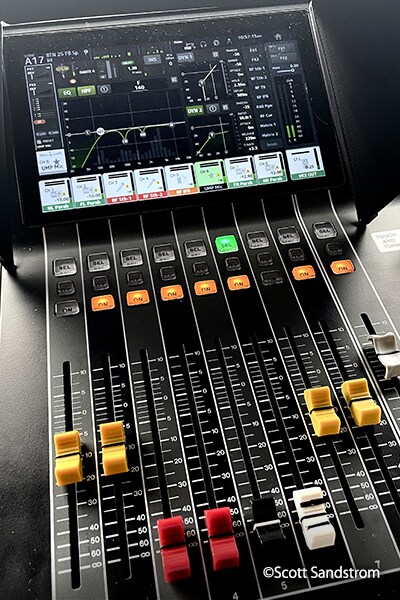
Scott Sandstrom mix configuration
The Human Element
Sandstrom’s position is equal parts mixer and traffic cop. “I’ve got a mic around my neck - one button talks to the reporter, another to the parab guys,” he says. “I’m mixing and talking at the same time, like an LD calling follow spots.”
He’s constantly refining his approach. “I’ve tried flipping phase on far mics to tame doubling. Sometimes it helps, sometimes not. But on DM3, it’s one button. Some big broadcast consoles take five steps.” In a fast-moving game, that immediacy matters.
At the end of the day, Sandstrom sums it up: “I’m a Foley artist with 22 team members on the field doing the work. My job is making it sound like one mic - clean, natural, and fast,” and bring that magic to the broadcast audience. Viewers may never know his name, but they feel his craft every time a hit cracks through the crowd roar and the stadium comes alive.
Location
United States